Route planning guide
Yahoo Driving Directions: Plan a Route Step by Step
Yahoo Driving Directions can help you prepare a trip before you leave: identify the correct start and destination, review the route on a map, note important turns, and check the overall distance and travel time. This independent guide explains a simple planning process and gives you direct access to our interactive directions tool.
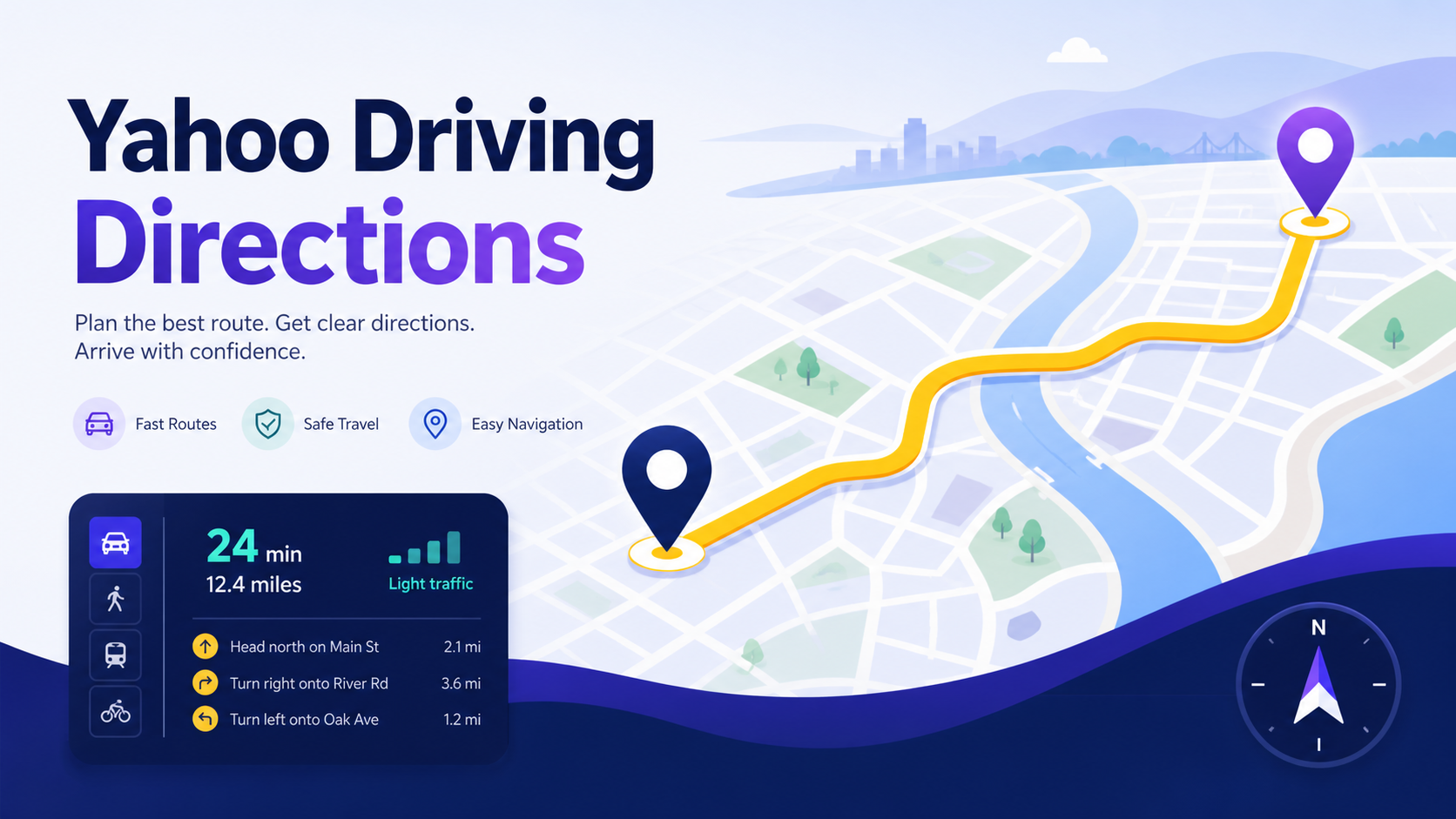
What Yahoo Driving Directions means on this website
People often use the phrase “Yahoo Driving Directions” when they want a familiar, browser-based way to find a route between two places. On this website, the phrase refers to our independent route-planning guide and interactive map experience. The map and routing data are supplied through third-party mapping technology; this website is not affiliated with or endorsed by Yahoo. For another route-planning resource, visit MapQuest.
The practical goal is straightforward: turn a starting place and destination into a route you can review before traveling. The tool can display a mapped path, origin and destination markers, estimated trip details, and written maneuvers when that information is available. Because roads, closures, construction, weather, and traffic can change, treat every result as a planning aid rather than a substitute for signs, local rules, or conditions in front of you.
How to use Yahoo Driving Directions
- Open the route tool. Use the route-planning interface to load the map and route form.
- Enter a precise starting point. Use a complete street address when possible. If you only know a city, landmark, or postal code, add the state or country to reduce ambiguity.
- Add the destination. Check spelling, street direction, unit information, and city name before requesting the route.
- Generate and inspect the route. Select “Get Directions,” then review the path, distance, estimated duration, and turn sequence. Zoom in around complicated interchanges or the final approach.
- Confirm the trip independently. Check current road restrictions, weather, traffic alerts, parking instructions, and destination hours before leaving.
If the tool cannot recognize a place, simplify the entry and try again. A format such as “street number + street + city + state” is usually clearer than a business nickname or incomplete local reference.
How to get more useful driving directions
Use unambiguous locations
Add the city, region, or postal code when two places share a name. Confirm that the map marker lands on the intended location.
Review the final approach
The last mile often contains private entrances, one-way streets, loading zones, or parking restrictions that a general route may not explain.
Compare time and distance
A route that looks shorter may take longer because of road type, speed limits, turns, or congestion. Consider the full trip rather than distance alone.
Plan important stops
For a longer journey, note fuel, charging, food, and rest opportunities. Use a route planner when your trip includes several stops.
What to check before you drive
A route is most useful when it is paired with a short pre-trip check. Confirm that the destination address is correct, look for current closures or severe weather, and leave enough time for delays. If you are crossing a border, entering a toll zone, driving an electric vehicle, or traveling in a remote area, plan those requirements before departure. You can also explore MapQuest for additional route-planning information.
- Safety first: Set the route before moving and do not type or study directions while driving.
- Obey the road: Follow posted signs, closures, traffic controls, and lawful instructions even when they conflict with a digital route.
- Keep a backup: Save the destination address and a broad route outline in case connectivity or map service becomes unavailable.
- Allow for change: Estimated times are not guarantees; traffic, weather, incidents, and construction may alter the trip.
For a fuller explanation of these limitations, review the driving-directions disclaimer.
Planning different kinds of trips
Daily commutes
Even a familiar commute can change because of construction or incidents. Check the route shortly before leaving, but avoid assuming that an estimated arrival time will remain fixed throughout the drive.
Long-distance travel
Break a long route into manageable stages. Identify rest areas, fuel or charging stops, overnight plans, and stretches with limited services. Share your general itinerary with someone you trust when traveling through unfamiliar or isolated areas.
Unfamiliar destinations
Study the last few turns, entrance location, and parking options before departure. A street-level preview can help you recognize the area and identify the destination before you leave.
Common questions about Yahoo Driving Directions
Is this website operated by Yahoo?
No. Road Maps and Driving Directions is an independent website and is not affiliated with, endorsed by, or operated by Yahoo.
Can I use a city or landmark instead of a full address?
Yes, the route tool can attempt to locate cities, landmarks, and other place descriptions. A complete address with city and region generally produces a more precise result.
Are the route and arrival time guaranteed?
No. Directions and time estimates depend on available mapping data and may not reflect a recent closure, weather event, access restriction, or sudden traffic change. Verify critical information before traveling.
Does the route page work on a phone?
The page is designed to adapt to smaller screens. For safety, configure and review the route while parked, then use a lawful hands-free setup if navigation is needed during the trip.